
 henrybella2211@gmail.com
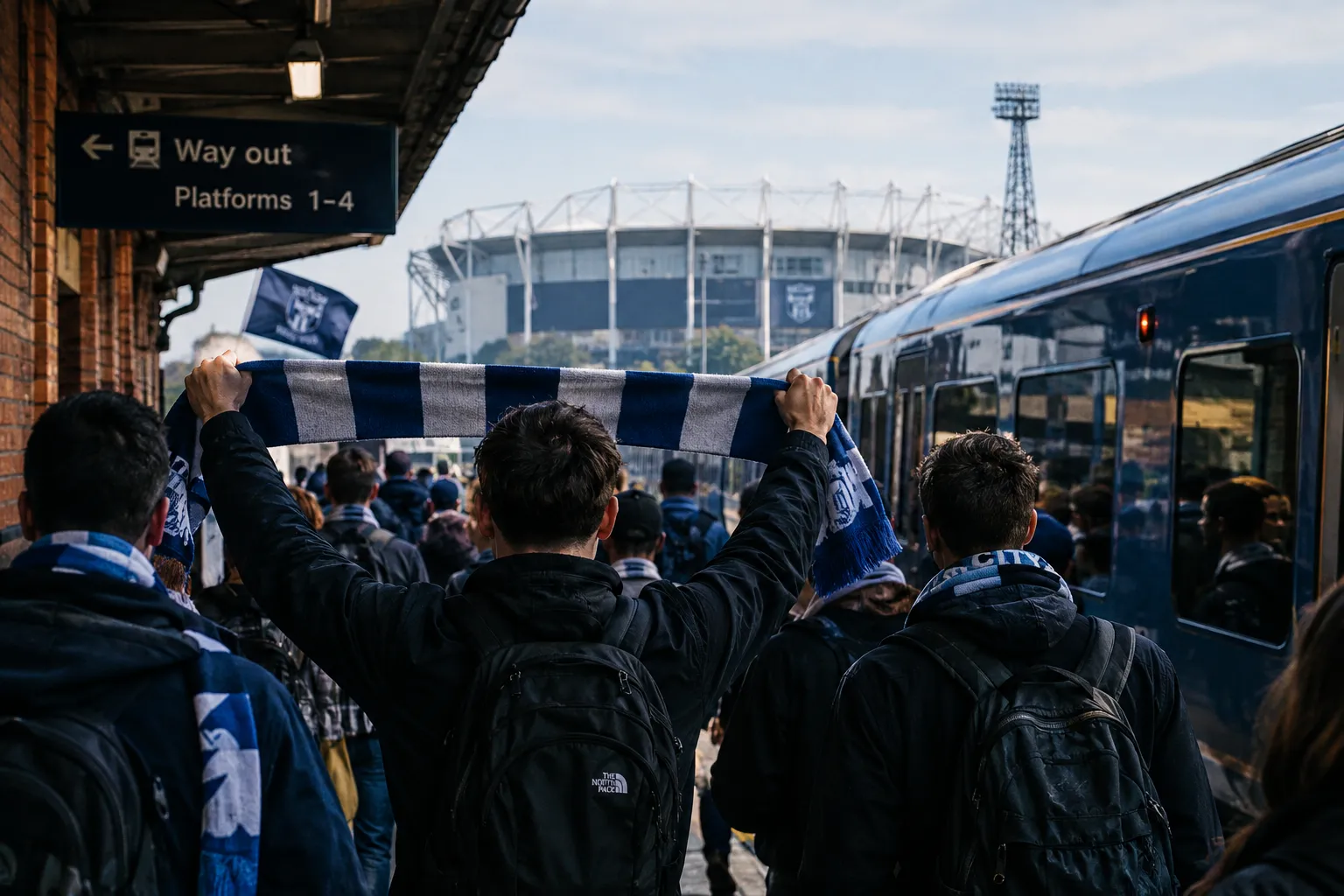
An away day is the best thing in English football and the easiest to get wrong. The game is ninety minutes; the day is twelve, and most of what makes it good or bad happens outside the ground — the train you booked, the pub you picked, the walk from the station you did not check, the last connection you found out about at ten to five.
This page is the overview of everything on this site. It covers the decisions in the order you make them: where to go, how to get there, what it will cost, what to wear, which grounds are worth the journey and what to do when you get there. Each section links to the detailed guide, so you can plan a specific trip or read the lot before your first one.
What makes an away day different from a home game?
Sitting among two thousand of your own in a corner of somebody else’s ground is a different experience from a home match, and not only because of the result. The away end is self-selecting — everyone there has spent money and a day to be there — which is why it is almost always the loudest part of any stadium, including grounds where the home support is excellent.
That is worth understanding before you plan the day around the football. A dull nil-nil on a good away trip beats a comfortable home win, and regulars will tell you the games they remember are rarely the ones with the best scorelines. Our piece on what makes a great football atmosphere gets into why some crowds produce it and others do not.
Planning the journey
The train is the default for most trips and the most expensive thing you will book if you leave it late. Advance fares are released around twelve weeks ahead in price bands, and the cheap band on a long route disappears within days.
The complication is television. Premier League fixtures get moved for broadcast with six or seven weeks’ notice, which can leave you holding a ticket for the wrong day. The fix is to book advance singles rather than returns, so one leg can be changed or written off without losing the whole fare. Our guide to planning an away day train covers split ticketing, railcards and the connections that catch people out, and National Rail is where to check engineering work before you commit.
Work the return leg first, particularly for a midweek fixture. If the last realistic connection means leaving on eighty minutes, you need a different plan before you buy anything.
How much does a football away day actually cost?
More than the ticket, and the ticket is the part you cannot change. Away prices in the Premier League are capped, so the variable costs are travel, food, drink and whatever you buy on the way in — and that is where a hundred-pound day becomes a hundred-and-sixty-pound one.
The savings are all in decisions made in advance: booking the day the fixture is confirmed, picking a pub ten minutes from the ground rather than at the turnstiles, eating before you go in, and checking the walk back to the station before kick-off rather than after. Our guide to doing an away day on a budget sets out what each of those is worth in practice.
For a long trip, a supporters’ club coach is usually the cheapest option and the one that requires least thought. You see the ground and nothing else, which for a game three hours up the line is a reasonable trade.
How away tickets actually work
Away allocations are sold through your own club, not the home one, and almost always on loyalty points — a running total earned attending matches, with away games usually worth more than home ones. For a popular fixture the allocation can clear at a points level most supporters will never reach, which is why away regulars tend to be people who have been going for years.
Three things are worth knowing if you are starting from nothing. Points build fastest from the games nobody else wants, so the midweek cup tie three hundred miles away is the cheapest way to earn access to the fixture you actually want. Allocations for smaller away ends are released in stages rather than all at once, so missing the first window is not the end of it. And tickets are issued to the named purchaser, with ID checked at some grounds, so buying for a group means everyone needs their own points history.
Prices in the Premier League are capped for away supporters, so the ticket is the one part of the day with a predictable ceiling.
What to wear, and where colours are a problem
In the away end, your own colours are the point. The question is what happens between the station and the turnstile, and the answer varies ground — some walks are entirely relaxed, others are mixed for a long stretch and most travelling supporters keep colours under a coat until they are close.
The practical advice is layers rather than a thicker shirt. Away ends are frequently high, open and cold, concourses are heated, and you will be outside for hours either side. Our guide to what travelling fans actually need from a shirt covers the fabric side, and the matchday guide to Premier League jerseys covers what to take and what to leave.
Two further options worth knowing. A retro shirt is the better away-day garment in several respects — heavier, warmer, and nobody minds if it gets beer on it — which we cover in retro football shirts on a matchday. And if you are buying before a trip, the online buying checklist and our piece on cheap football jerseys for away days will stop you paying for the wrong version. If you want cheap football jerseys that will survive a season of travelling, buy for weight and construction rather than for the badge.
Ground ground
The general advice stops being useful at the turnstile, because every stadium has its own transport, its own away-end position and its own quirks. The detailed guides:
Anfield. Covered from both sides — what to wear to Anfield for the practical side, and the shirts behind the trophies for the history you will see on the walls.
Old Trafford. Transport, the away allocation and the walk in, in the Old Trafford away day.
St James’ Park. One of the best trips in the country and one of the steepest away ends: St James’ away day.
Tottenham Hotspur Stadium. Impressive inside, awkward to leave, as set out in the Spurs away day guide.
London generally. More grounds within an hour of each other than anywhere in Europe, ranked for the visiting supporter in the best London grounds for an away day.
Why do some grounds sound better than others?
Mostly roof and proximity. A low roof traps sound and reflects it back onto the pitch; stands set close to the touchline put the crowd inside the game rather than watching it from a distance. The grounds with the worst atmospheres are almost always the ones with the largest gap between the front row and the pitch.
Standing is the other factor, and it is legal again in designated areas after three decades of all-seater rules. Licensed standing sections are noisier, partly because the people who choose them were already standing, and the experience is better than standing in a row of seats. Our piece on why safe standing came back explains how it works and which grounds have it.
Then there is the singing itself. Away ends carry most of it, and the songs travel between clubs in ways that are genuinely traceable — where football chants come from follows a few of them back.
The fixtures worth travelling for
Not all away days are equal, and the derbies are the ones to prioritise if you can only do a few. Why the Merseyside der is different covers the one played between two grounds a mile apart, and Arsenal versus Chelsea the biggest of the London fixtures.
It is also worth knowing why these games feel so hostile, and the answer is partly measurable. Our look at why home advantage still matters covers what the crowd actually does to a result, and the title race matrix picks out the fixtures that tend to decide a season.
Beyond the Premier League
The best-value away days in England are in the lower divisions and below. Tickets are a fraction of the price, the grounds are more interesting, and you can stand at most of them without needing a licensed section.
If you want to build a season around it, groundhopping for beginners covers how to plan a multi-game weekend without spending all of it on trains, and why non-league football is worth your Saturday makes the case for the level most people have never tried.
If you follow Liverpool
Most of this site is written from a Liverpool-supporting away end, and a few pieces go deeper on the club itself: the tactical breakdown of Anfield’s high press, what the squad needs from the transfer window, and what makes a great Premier League midfielder.
For the kit history, England’s shirt from 1966 to now and when Premier League kits became icons are both worth an evening. And for the other half of Merseyside, Everton’s royal blue.
Frequently asked questions
How far in advance should I book an away day?
As soon as the fixture has a confirmed date, usually six to eight weeks out. Earlier than that risks a broadcast move; later costs significantly more on the train.
Can I wear my own club’s colours at an away game?
In the away section, yes — that is what it is for. Elsewhere in the ground you will be asked to move. On the walk to most grounds, travelling supporters tend to cover up until they are close.
Is a coach cheaper than the train?
For long trips, usually yes, and the cost is predictable. The trade-off is that you see the stadium and nothing else of the city, which suits games where the football is the whole point.
Which is the best away day in England?
It depends what you want. For the setting, Craven Cottage; for noise, Selhurst Park; for ease, Brentford; for the occasion, St James’ Park. The London guide ranks them for a visiting supporter.
[…] without paying home-shirt prices, start there the principle holds across every range, as our away day guide notes about buying before a […]