
 henrybella2211@gmail.com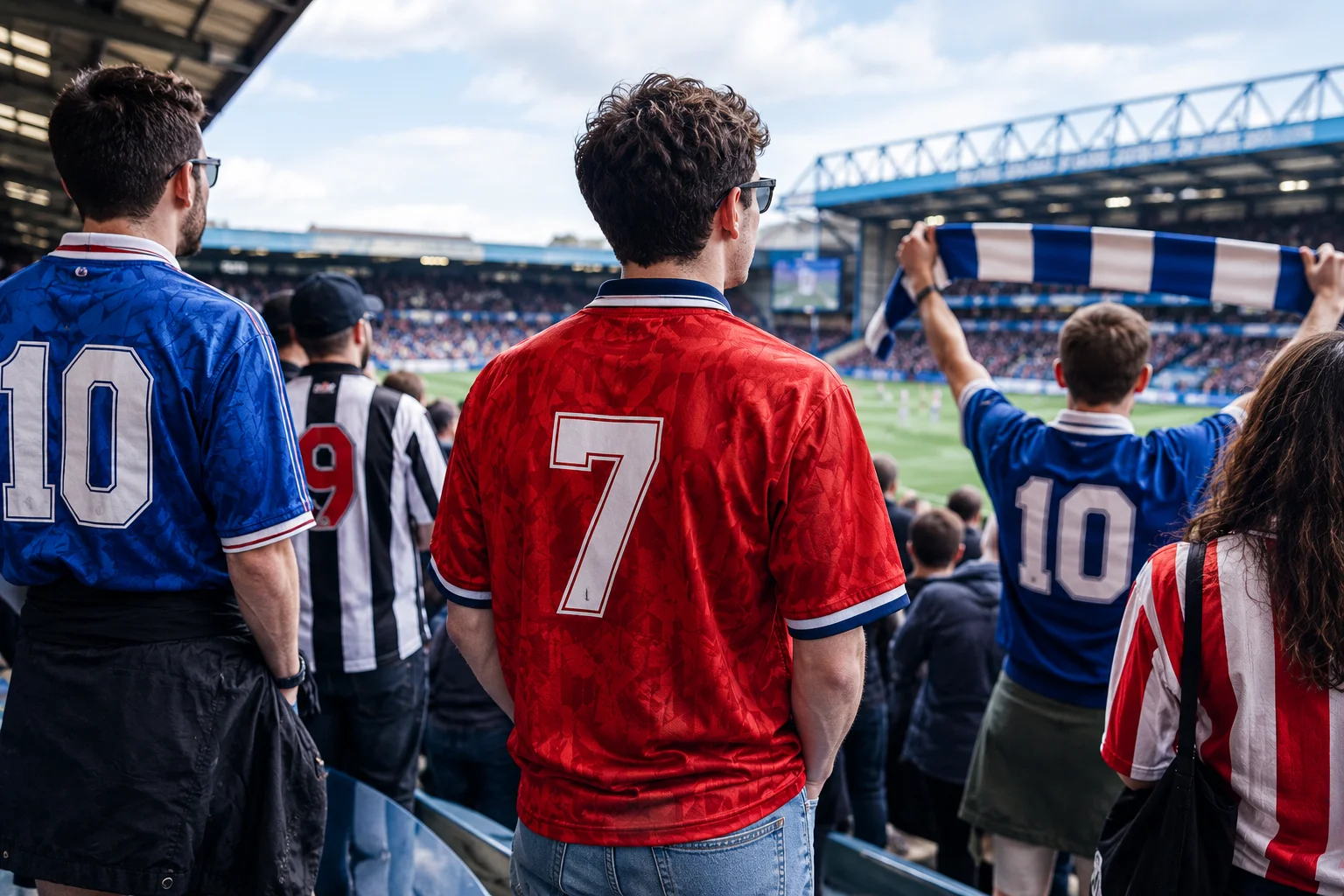
Walk around any ground before kick-off and you will see them: shirts from ten, twenty, thirty years ago, worn people who either kept them or went looking for them. The retro shirt has become one of the more common sights on a matchday, and it says something different from the current kit.
It also brings a set of practical questions that a new shirt does not. Older fabric behaves differently, older designs fit differently, and not every era works equally well in a crowd.
Why wear a retro shirt to a game?
Partly because it is a statement about how long you have been going, and partly because many older designs are simply better than the current one.
A current shirt says you support the club. A shirt from a famous season says you remember it, or wish you did. It starts conversations in a way a new kit rarely does, particularly with older supporters who wore the original. And for anyone who finds this year’s design uninspiring, an older shirt is a way of wearing the club’s colours without wearing something you dislike.
The other reason is more practical. A retro shirt does not date. It has already dated, and it will look the same in five years as it does now, which a current shirt will not.
Which eras work best?
The ones with a distinctive design and a season people remember.
Shirts from the late 1980s through the 1990s tend to be the most popular retro choices, because that period produced bold designs and because many of today’s supporters grew up watching it. Earlier shirts, from the 1970s and before, are rarer and read more as collectors’ items than matchday wear. Shirts from the 2000s occupy an awkward middle ground, recent enough not to feel retro yet but old enough to look out of date.
The safest choices are shirts tied to a well-known season. People recognise them, and recognition is most of the point.
Original or reproduction?
For a matchday, a reproduction is usually the better choice, and this surprises people.
Original shirts from the 1980s and 1990s are thirty years old. The fabric is fragile, the printing cracks, and a spilled drink or a snag on a seat back can do damage that cannot be undone. Wearing an original into a crowded stand is a genuine risk to something that may be hard to replace.
Reproductions are made to be worn. They use modern fabric, survive washing, and cost a fraction of what an original in good condition does. Anyone browsing retro football shirts for a game rather than a display case is better served a well-made reproduction than an original they will spend the afternoon worrying about.
How does older fabric behave?
Differently, and it changes how you dress for the match.
Original shirts from before the mid-1990s are often heavier than modern kit and less breathable, since the wicking fabrics that define current shirts had not arrived. On a warm day that makes them noticeably hotter to wear. On a cold day it works in your favour, since the heavier fabric holds warmth in a way a modern shirt does not.
The cut is the other difference. Older shirts were made much looser, so a large from 1992 fits like an extra-large from today. If you are buying an original, buy on measurements rather than the size letter.
How should you care for one?
More carefully than a current shirt, particularly if it is an original.
Cool wash at thirty degrees, inside out, on a gentle cycle. No tumble dryer under any circumstances, since heat destroys old printing and can shrink older polyester. No fabric softener. Air dry flat rather than on a hanger, because the weight of a wet shirt can stretch old seams.
For reproductions the same rules apply but the stakes are lower. The point of a reproduction is that it can be treated like a normal shirt.
What should you check before buying?
For a reproduction, the same things as any shirt: crest attachment, stitching at the hem and cuffs, and fabric texture in the photographs. A reproduction with a heat pressed badge will lift at the corners just as a cheap modern shirt would.
For an original, add condition checks. Look for pilling on the fabric, cracking in any printing, and fading at the seams. Ask for photographs of the actual shirt rather than a stock image, and treat any seller who cannot provide them with caution.
How do you tell a good reproduction from a poor one?
Mostly whether the maker has reproduced the garment or only the graphics.
A good reproduction gets the colours right against period photographs, uses a crest that matches the era’s design rather than the current one, and reproduces the collar style of the original. A poor one puts an old design on a modern template, with a current crest and a modern collar, which reads as wrong to anyone who knew the original.
Fabric weight is the other tell. Reproductions of 1980s and early 1990s shirts should feel heavier than modern kit, since the originals did. A retro design on a featherweight modern knit has reproduced the picture and nothing else. That may be fine for your purposes, but it is worth knowing before you pay for authenticity that is not there.
Do retro shirts have a place outside matchdays?
More than current shirts, and this is where they earn their keep.
A current kit worn away from a match reads as a football shirt. A retro one reads as a design choice, and plenty of people wear them casually who would never wear this season’s kit to the pub. That flexibility is one reason the retro market has grown as it has, and one reason a good reproduction is worth having even for someone who goes to few games.
Does it matter which shirt you wear where?
A retro home shirt works at a home game the same way a current one does. A retro away shirt works anywhere, since nobody expects it to match the ground.
The one thing worth avoiding is a retro shirt from a season the club would rather forget. Supporters have long memories for both good and bad years, and a shirt from a relegation season draws a different kind of comment from one that won the league.
Our guide to what to wear to Anfield covers the current-kit side of the same question, and the layering advice there applies to older shirts too.
Frequently asked questions
Should I wear an original retro shirt to a match?
Probably not. Originals from the 1980s and 1990s are fragile and hard to replace. A reproduction is built to be worn and costs far less.
Do retro football shirts fit differently?
Yes. Older shirts were cut much looser, so buy originals on measurements rather than the size letter. Reproductions usually follow modern sizing.
How do I wash a retro football shirt?
Cool, inside out, gentle cycle, no softener, no tumble dryer, and dry flat. Heat is what damages old printing and fabric.