
 Shahneel Ijaz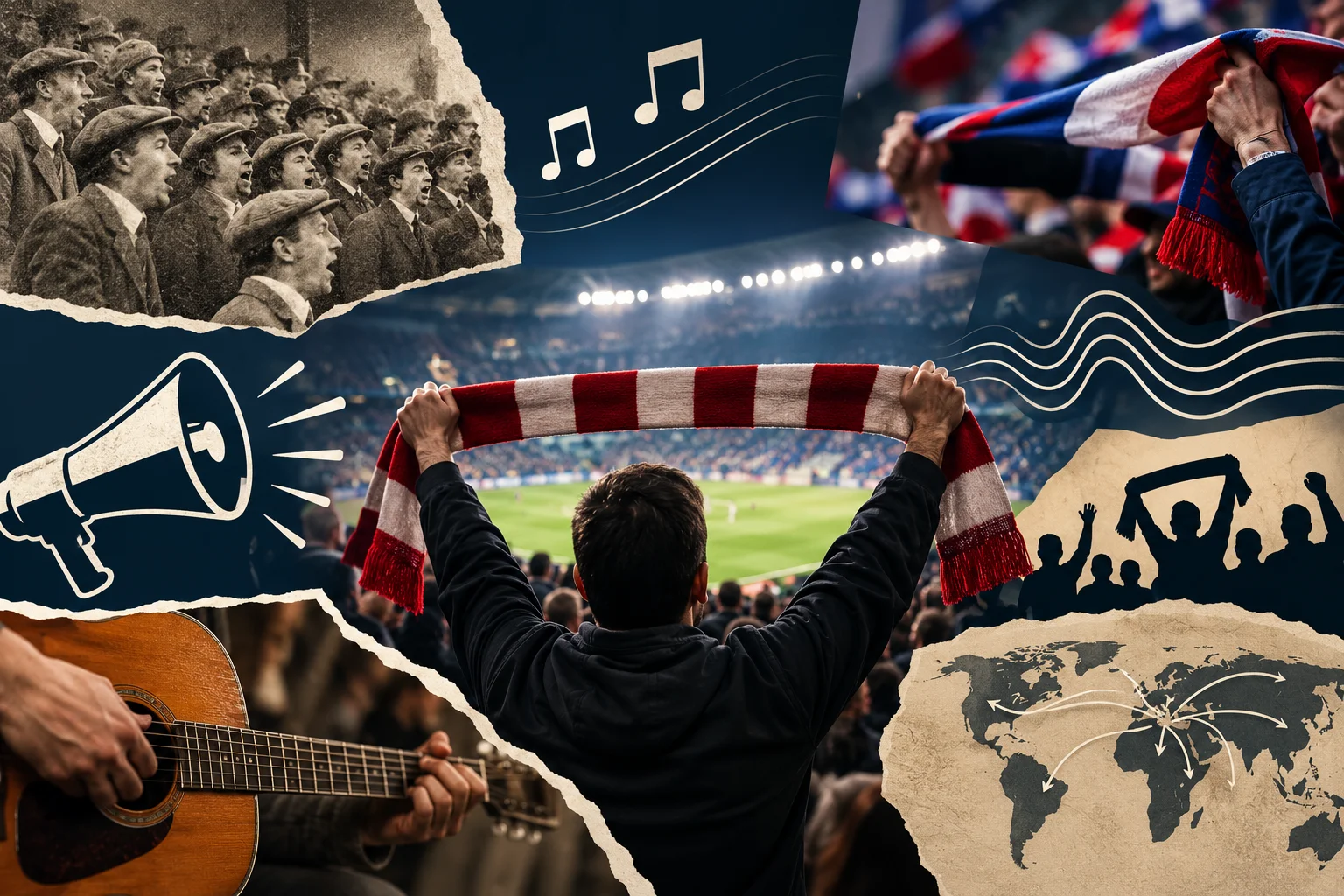
A football crowd singing in unison is one of the sport’s defining sounds, and most supporters have never thought about where the songs come from. They are not written the club or handed out at the gate. They appear, spread, mutate and occasionally vanish, through a process that has more in common with folk music than with anything official.
Understanding how chants work explains a good deal about what a crowd actually is.
Where do the tunes come from?
Almost always from somewhere else, borrowed and reworded.
Very few football chants have original melodies. The overwhelming majority take an existing tune, a pop song, a hymn, a folk song, a television theme, and fit new words to it. The tune has to be simple enough for thousands of people to sing without rehearsal, which is why the same handful of melodies turn up at grounds across the country with completely different words.
That borrowing is the key to how chants spread. A tune everyone already knows needs only new words, and new words travel fast.
How does a new chant start?
With a small group, and a moment.
A chant usually begins with a few supporters in the most vocal part of the ground, often responding to something that has just happened: a goal, a signing, a refereeing decision, a rival’s misfortune. If the words are good and the tune is familiar, the people around them join in, and within minutes a section of the ground is singing something that did not exist that morning.
Most die immediately. The ones that survive are the ones that capture something, a player’s quality, a shared grievance, a joke at the rival’s expense, in words memorable enough to be repeated next week.
Why do some chants last for decades?
Because they become part of the club’s identity rather than a response to a moment.
A chant tied to a specific match or player fades when the moment passes. A chant that expresses something permanent about the club, its history, its city, its sense of itself, can last for generations. Those become anthems, sung before every match regardless of the result, and new supporters learn them the way they learn the club’s colours.
The oldest of these predate most of the supporters singing them, passed down because they say something about belonging that does not go out of date.
What makes a chant spread between clubs?
A good structure that other supporters can adapt.
When a chant with a strong tune and an adaptable structure appears at one ground, supporters of other clubs borrow it, swapping in their own players and grievances. A chant can travel the length of the country in a season this way, appearing at a dozen grounds with a dozen different sets of words. The tune carries it; the words are local.
This is why so many chants feel familiar even at a ground you have never visited. You have heard the tune before, with different words, somewhere else.
Why do the best ones involve the rival?
Because shared identity defines itself against something, and the rival is the nearest something.
A large share of the most durable chants are about the other club rather than your own: mocking their failures, their supporters, their city. That is not only hostility. It is a way of saying who you are saying who you are not, and it binds a support together more tightly than praise of your own side does. The rivalry gives the crowd its sharpest material, which is why der chants are among the most inventive and the most repeated.
Do clubs or players influence them?
Rarely on purpose, and attempts to manufacture a chant usually fail.
Chants that work come from the crowd, and crowds can tell the difference between something that arose naturally and something handed to them. Clubs that have tried to introduce official songs have mostly been ignored. Players, on the other hand, genuinely want a good chant, since being sung about is a sign of acceptance, and a player without one sometimes feels the absence.
The best player chants are affectionate, often funny, and specific to the individual. They cannot be designed. They have to be earned.
Do away fans sing more?
Almost always, and for good reasons.
Travelling supporters are self-selected: they have spent money and time to be there, they stand together in one block, and they have every reason to make themselves heard. A good away following in full voice can out-sing a much larger home crowd, and some of the best terrace atmospheres come from the exchange between the two, each side answering the other. The away end is where terrace culture is often at its sharpest.
Why do crowds sing at all?
Because singing together does something no individual voice can.
A crowd singing in unison turns thousands of separate people into one thing, briefly, and that is most of what supporters are there for. The songs are how a crowd expresses itself, lifts its team, intimidates opponents and marks itself out from the away end. A ground where nobody sings is a ground where the crowd is a collection of spectators rather than a single support, and players notice the difference.
The content matters less than the act. A crowd singing anything, in numbers, is doing the thing that makes a football crowd what it is.
Are some chants a problem?
Yes, and clubs and authorities have worked to remove them.
Not every chant is affectionate or funny. Some are abusive, discriminatory or tied to rivalries in ways that cross a line, and both clubs and the authorities have made efforts to stamp those out, with mixed success. The difficulty is that chants come from the crowd and cannot simply be switched off, so the response has relied on a combination of enforcement and supporters themselves deciding which songs they want associated with their club.
The best of the terrace culture, the wit and the shared identity, exists alongside a worse side, and the history of chanting includes both.
Are chants changing?
Yes, as the grounds and the crowds change.
Quieter, more corporate stadiums produce fewer new chants, because chants need a critical mass of vocal supporters together to start and spread. Safe standing and dedicated singing sections have helped in some grounds concentrating the people most likely to sing. Social media has changed the spread too, with chants now travelling online as well as between grounds.
What has not changed is the basic process: a borrowed tune, new words, a small group, and a moment. Our piece on what makes a great football atmosphere covers why some grounds produce that process more readily than others.
Frequently asked questions
Where do football chants get their tunes?
Almost always from existing songs — pop, hymns, folk songs, television themes — reworded for the terraces. The tune has to be simple enough for thousands to sing without rehearsal.
How do football chants spread between clubs?
A chant with a good tune and an adaptable structure gets borrowed other supporters, who swap in their own players and grievances. The tune travels; the words are local.
Can clubs create official chants?
They rarely succeed. Chants that work arise from the crowd, and supporters can tell the difference between something natural and something manufactured.