
 henrybella2211@gmail.com
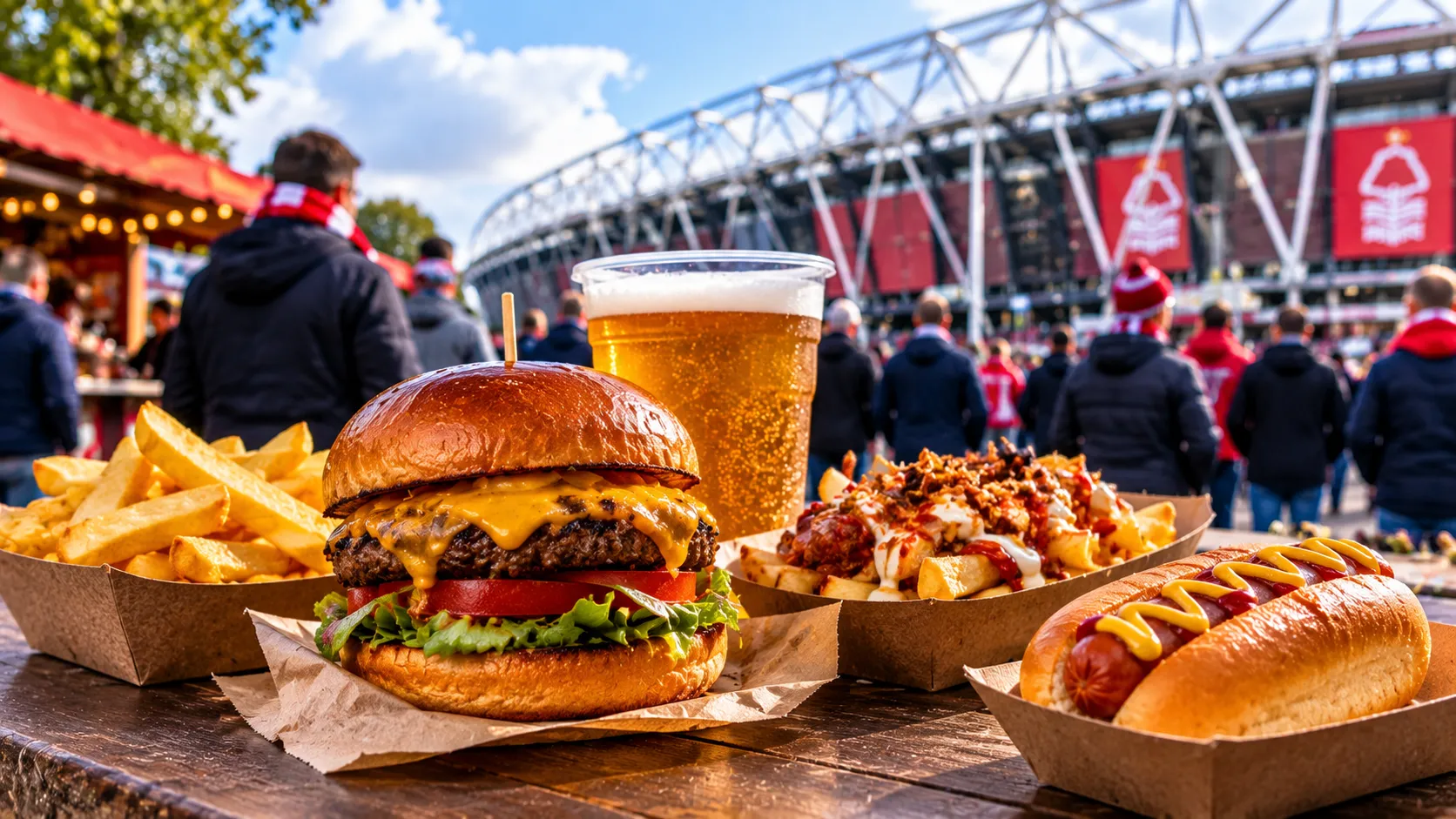
Finding the best food near football grounds is a skill worth developing, because the default option is terrible and expensive. A pie inside a stadium costs several times what the same thing costs two streets away, arrives lukewarm, and is eaten standing up in a concourse with four hundred other people.
The alternative requires about ten minutes of planning and transforms the day. Every English football ground sits in a neighbourhood with its own food, much of it genuinely good and most of it cheaper than the kiosk inside.
Why stadium food is the way it is
Not malice logistics. A stadium catering operation serves tens of thousands of people inside a forty-minute window, twice a month, with temporary staff. Nothing survives that except food that can be held hot in volume, which is a short list and does not include anything you would choose.
The pricing follows from the same constraint. The operation is idle most of the time and overwhelmed the rest, so the margin has to come from a handful of hours, and the audience is captive definition once it is through the turnstile.
Understanding that makes the decision easy. Eat before you go in, always, and treat whatever is inside as a contingency rather than a plan.
The regional classics worth seeking out
This is the genuinely enjoyable part of away travel. Pie and mash with parsley liquor in east London, at shops that have been doing it for over a century and are an experience in themselves. Scouse in Liverpool, which is the dish the city is named after some accounts and is exactly right on a cold afternoon.
Chips and gravy across the north, which southerners mock until they try it in February. A proper chip shop in the north east, where the standard is noticeably higher than the national average. Balti houses in Birmingham. Curry in Bradford and Leicester, both of which have a better claim than anywhere else in the country and neither of which is far from a ground.
The rule is simple: whatever the city is known for, there is a version of it within a fifteen-minute walk of the stadium, and it will be better and cheaper than anything inside.
How do you find somewhere good without local knowledge?
Three heuristics that work almost everywhere. First, walk away from the ground rather than towards it the places nearest the turnstiles charge matchday prices for matchday-standard food, and quality rises sharply at about the ten-minute mark.
Second, look for the places that are not football-themed. A cafe with no scarves on the wall is serving the neighbourhood rather than the fixture list, which means it has to be good on the other 340 days of the year.
Third, go early. Anywhere decent near a ground is full ninety minutes before kick-off, so the window is two to three hours before, which also means a shorter queue and somewhere to sit.
What about the pubs?
Pubs near grounds divide sharply into two kinds. The ones immediately outside are usually home-only, busy, and not serving food worth eating. The ones a ten-minute walk away are frequently excellent, mixed, and will feed you properly.
For an away supporter the second kind is the target, and the way to find it is to pick a direction away from the stadium and the station. Local supporters’ forums are surprisingly good on this and generally honest about which places welcome visiting fans.
If you are doing a long day, eating properly at lunchtime rather than drinking through it is the single biggest improvement you can make to an away trip, and the one most regulars arrive at eventually. Budgeting the day as a whole rather than the match is covered in how to do an away day on a budget.
What has actually changed at new grounds
The newer stadiums have improved this a great deal, and credit where it is due. Several now have proper street-food operations, local breweries pouring their own beer, and concourses designed to be used rather than survived. At those grounds eating inside is a reasonable choice rather than a failure of planning.
The trade-off is that new stadiums are often built away from the neighbourhoods that had the good food in the first place out-of-town sites with a retail park and nothing else within walking distance. You gain a decent concourse and lose the chip shop that three generations used.
Older grounds are the opposite: grim inside, excellent outside. Which of those you prefer says something about what you want from an away day. The grounds themselves shape the whole experience, as the best London grounds for an away day sets out.
The grounds where inside is genuinely better
A few, and it is worth knowing which so you do not waste a walk. The newest stadiums have invested properly in catering: local breweries pouring on the concourse, street-food units run actual traders rather than a contract caterer, and enough serving points that the queue moves.
The tell is usually the brewery. A ground pouring beer from a local independent has thought about the concourse as somewhere people spend time rather than a corridor, and the food is normally decent too. Where the only option is a national lager and a sealed pie, nothing has changed since 1995.
The other factor is whether the ground has anywhere near at all. An out-of-town stadium surrounded a car park and a dual carriageway gives you no alternative, so a good concourse there is worth more than a good concourse at a ground with a high street outside.
The away end exception
One category genuinely has no good answer: the away end at a ground where the away concourse has been treated as an afterthought. Several stadiums have excellent home-end catering and a single serving hatch for two thousand visiting supporters, which produces a queue that takes the entire half-time interval.
The only workable response is to eat before you go in and accept that you will get nothing at half time. Visiting supporters who try to buy at the break generally miss five minutes of the second half for a lukewarm pie, which is a poor trade on any measure.
It is also worth knowing that some grounds restrict away fans to a section of the concourse rather than the whole thing, so the options you can see on a map are not necessarily options you can reach.
Practical notes
Take something with you for the journey home, particularly midweek. Nothing useful is open near most grounds at ten at night, which is how a long trip turns into service-station prices and regret.
Most grounds are now cashless inside, while the chip shop ten minutes away often is not carry a little cash for exactly that reason. And if you are travelling with a group, decide where you are eating before you set off rather than negotiating it on a cold pavement at one o’clock. Midweek trips compress all of this, which is the subject of why midweek away games are the real test.
Frequently asked questions
Is stadium food always worse than eating outside?
Almost always, and considerably more expensive. The exception is some of the newer grounds, which have proper street-food operations and local beer on the concourse.
How far from the ground should I look?
About a ten-minute walk. Quality rises and prices fall sharply once you are past the places relying entirely on matchday trade.
When should I eat before a game?
Two to three hours before kick-off. Anywhere decent near a ground is full ninety minutes out, and eating early also gets you a seat.
Do I need cash?
Inside, no most grounds are cashless. Outside, often yes, because the best small places frequently still are not.
[…] What to leave: anything you would mind carrying for twelve hours. Eating properly beforehand matters more midweek than at any other time, which is covered in the best food near football grounds. […]