
 henrybella2211@gmail.com
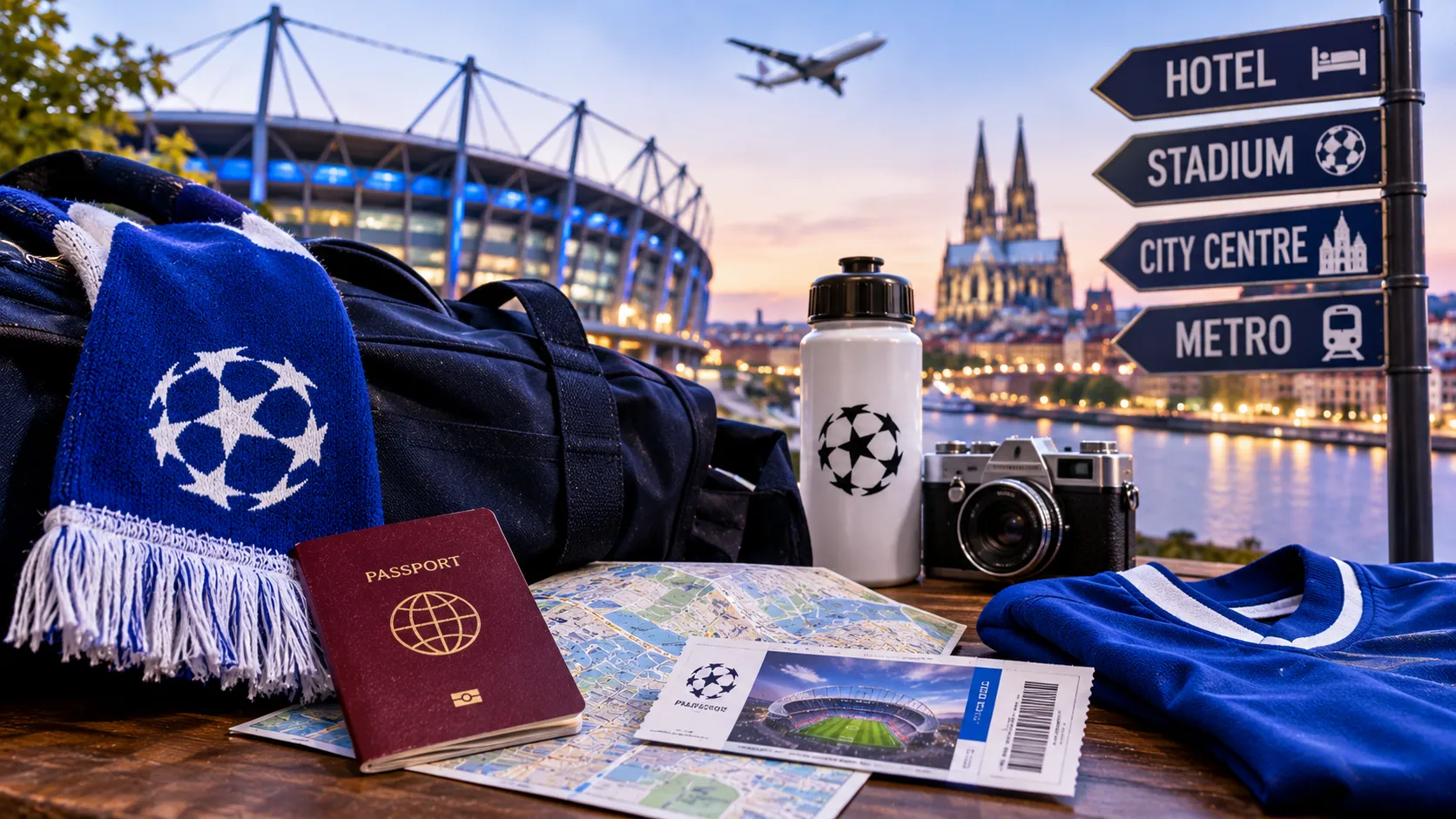
Working out how to plan a European away day is a different exercise from planning a domestic one, and the difference is not just distance. Domestic trips fail in small ways; European trips fail expensively, and almost always for reasons you could have seen coming.
The order you do things in matters more than anything else. Get that wrong and you will pay twice for the same mistake.
Book in the right order
Ticket first, always. Not flights, not accommodation the ticket. European away allocations are small, loyalty-based and frequently oversubscribed, and a flight booked before you have a ticket is a flight you may be taking for no reason.
Flights second, because they are the thing that moves most in price and the thing with the fewest alternatives. Accommodation third, since there is almost always something available somewhere even at short notice, and the price difference between booking early and late is smaller than for flights.
The exception is a final or a late-round tie in a city with limited capacity, where accommodation goes before flights do. In that case book a refundable room early and accept losing a small deposit if the result goes the wrong way.
Work out the return journey first
The single most common European away-day failure is arriving at a stadium you cannot easily leave. Grounds in several European cities sit well outside the centre, served transport that stops running or gets overwhelmed sixty thousand people at the same time.
Find out before you go: how far out is the ground, what runs back, and until when. If the answer is a single metro line that closes at midnight and the match kicks off at nine, you need a plan that is not the metro.
Share a taxi, walk the first few kilometres to a quieter stop, or book accommodation near the ground rather than near the nightlife. Any of those beats standing in a queue for two hours, which is what everyone who did not think about it will be doing.
What does it actually cost?
Less than people assume if you book early, considerably more than a domestic trip if you do not. Flights are the dominant cost and the most variable the same route can triple between a sensible booking and a panic one.
Match tickets for European aways are usually modest Premier League standards, often well below what the equivalent domestic ticket costs. Food and drink vary enormously city, and in much of southern and eastern Europe a day out costs a fraction of what it does in England.
The hidden costs are transfers and the return leg. Budget for a taxi you had not planned, and for one meal more than you expect to eat, and you will be close. Our budget away day guide applies the same logic domestically.
Should you fly out and back the same day?
It is cheaper, it works, and it is miserable in a specific way that people underestimate. A same-day European trip means a very early flight out, a long gap before kick-off with nowhere to leave a bag, and a return flight that depends on the match finishing on time and the transport working.
The failure mode is the one that matters. If the match goes to extra time, or the away section is held back, or the transport back from the ground is overwhelmed, a tight return flight becomes a missed one and a missed flight on a Tuesday night in an unfamiliar city costs more than the hotel you were trying to avoid.
If you do it, build in hours rather than minutes, and have a rough idea of what the alternative looks like. If the margin is under four hours between final whistle and departure, pay for the room.
Paperwork and practicalities
Check the passport validity rule for where you are going, because several destinations require a period of validity remaining beyond your return date and people get turned away at check-in for this every season.
Travel insurance that covers the match itself is worth reading carefully. Standard policies cover illness and cancellation; very few cover a fixture being moved, which happens more often in European competition than domestic football because of broadcast and policing decisions.
Take some cash. Card acceptance is near-universal in most of Europe and not at every stadium kiosk, and the one place you want to be certain is the one selling the thing you queued twenty minutes for.
Getting tickets when you are not in the loyalty scheme
Plenty of people travel to European fixtures without an away ticket, and the options are legitimate, grey and best avoided in roughly that order.
Legitimate: general-sale tickets in home sections, which some clubs and some countries permit and others forbid outright. Where it is allowed, buying through the home club’s official channel is straightforward and cheap, and the obvious caution is to behave accordingly in a home end.
Grey: neutral or hospitality packages sold through agencies, which are usually genuine and usually heavily marked up. Read what is actually included before paying, because the gap between the listing and the reality can be large.
Avoid: street sales outside the ground. Forgeries are common, prices are extortionate, and in several jurisdictions buying one is an offence as well as a waste of money.
Inside the ground
Away sections in European grounds are frequently high, steep and at one end, with segregation arrangements considerably stricter than in England. Expect to be held back after the final whistle, often for half an hour or more, which feeds directly into the return-journey problem.
Bring as little as possible. Bag policies vary and are enforced unpredictably, and the fastest way into a European ground is with nothing that needs searching.
And get there early, properly early. Entry processes are slower than domestic ones, turnstile allocation is often confusing, and arriving ten minutes before kick-off at an unfamiliar ground with a language you do not read is how people miss goals.
What makes it worth it
The atmosphere, which is different rather than better. Continental support is organised in ways English grounds are not coordinated singing, visual displays, a tempo that is set rather than reactive and experiencing it is the actual point of the trip.
The city is the other half. A domestic away day is a match with a journey attached; a European trip is a weekend in a place you would not otherwise have visited, and treating it as a short holiday that happens to include a football match produces a better time than treating it as a very long away day.
And the people, plus the city itself which is why some destinations are worth more than others, as set out in the best European cities for a football weekend. European aways attract the committed end of any support, which makes for better company than a home league fixture, and the shirt-swapping tradition covered in AC Milan retro shirts is part of how that works.
Frequently asked questions
What should I book first for a European away day?
The match ticket. Allocations are small and loyalty-based, and booking flights before you have a ticket risks paying for a trip you cannot use.
Why does the return journey matter so much?
Because many European grounds sit well outside the city with limited transport, and away sections are often held back after the whistle. Plan how you leave before you plan how you arrive.
Are European away tickets expensive?
Usually less than the domestic equivalent. Flights, not tickets, are the dominant cost of the trip.
How early should I get to the ground?
Earlier than domestically. Entry processes are slower, turnstile allocation is often unclear, and signage may not be in a language you read.