
 Shahneel Ijaz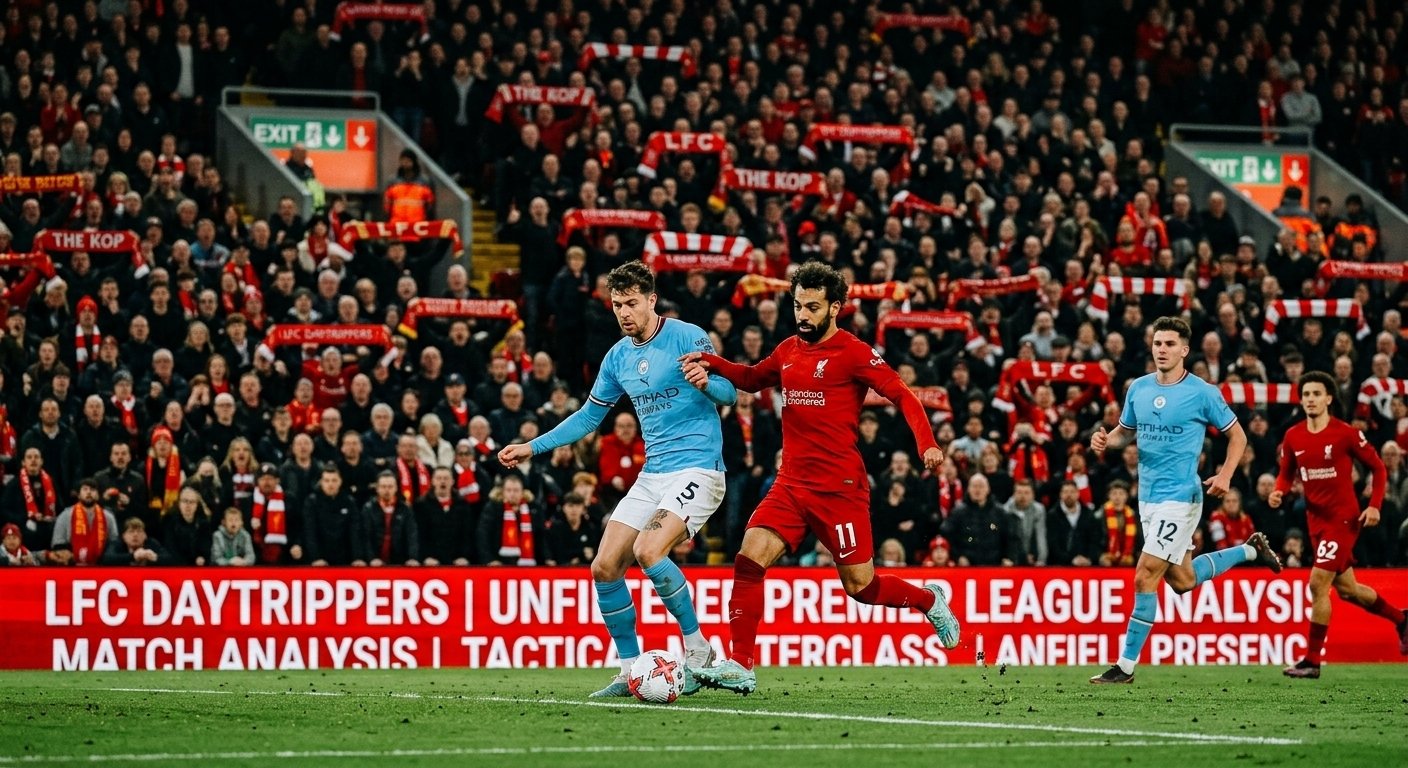
Tactical Breakdown: How Anfield’s High Press Dismantled the Champions
There is a particular kind of match that Anfield has produced more than once. The reigning champions arrive as the better side on paper, with the better players and the better record, and leave having been pressed out of the game. The scoreline tells part of it. What happens in the first twenty minutes tells the rest, because that is usually where the match is decided.
This is a breakdown of how that pattern works: what Liverpool’s press actually does, why a possession-based champion is unusually vulnerable to it, and why the ground itself is part of the system.
What does a high press actually involve?
Defending in the opponent’s half rather than your own, and doing it in a coordinated way.
When the opposition has the ball at the back, a pressing side pushes its forwards and midfielders up to close down the players in possession, cut off the short passing options, and force either a long clearance or a mistake. The aim is to win the ball back within a few seconds of losing it, close to the opponent’s goal, where a turnover becomes a chance almost immediately.
Done properly, it is defending and attacking at the same time. Done badly, it leaves enormous space behind the pressing players for the opponent to play into.
How is Liverpool’s version structured?
Around triggers, angles and a defensive line that holds its nerve.
The press is not constant. It is launched on specific cues: a slow pass back to a centre-back, a goalkeeper receiving the ball, a full-back taking a heavy touch near the touchline. When the trigger arrives, the nearest forward closes the ball-carrier at an angle that cuts off one side of the pitch, the second forward covers the obvious pass, and the midfield steps up behind them to squeeze the space. The player in possession is left with a bad option or a worse one.
Behind that, the defensive line pushes up to keep the team compact, so the distance between the pressing forwards and the defenders stays short. That is the part that requires courage, because a high line can be beaten a single ball over the top. It is also the part that makes the press work.
Why are champions particularly vulnerable?
Because the qualities that win a title are the ones a press attacks.
Champion sides are usually possession teams. They build from the back, move the ball patiently through midfield and control matches keeping the ball. That approach depends on having time on the ball in their own half, and the press removes it. A centre-back who is used to three seconds to pick a pass suddenly has one, and a goalkeeper who distributes calmly is being closed down before he has looked up.
Possession sides are also built to attack, not to defend transitions. When the press wins the ball thirty metres from goal, the champion’s defenders are out of position, because they were positioned to start an attack rather than stop one.
What role does Anfield play?
A larger one than most tactical breakdowns admit.
The press is physically demanding and mentally draining, and it relies on the pressing players believing they will win the ball. A loud, hostile crowd does two things. It lifts the home players, giving them the energy to keep pressing when the legs are tiring. And it unsettles the visitors, making the centre-back who is being closed down slightly more likely to rush the pass, and the goalkeeper slightly more likely to go long.
Those small shifts are the margin a press lives on. A press at a quiet ground is a tactic. A press at Anfield, with the crowd rising every time the ball is forced backwards, is closer to a weather system.
Where do the goals come from?
From turnovers, and they tend to arrive in clusters.
A champion side that is pressed successfully will lose the ball in dangerous areas several times in a short period, and each turnover produces a chance. Not all are taken, but the frequency is what overwhelms a defence. A team can defend one counter-attack. Defending four in ten minutes, with the crowd roaring each one, is a different problem.
The goals in these matches are rarely elaborate. They come from a pass intercepted, a touch too heavy, a shot from the edge of the area before the defence has reset. The press creates the chance; the finish is almost incidental.
How do champions try to counter it?
going long, slowing the game down, or playing through it, and each has a cost.
Going long surrenders possession, which a possession side hates and which hands the ball straight back to the pressing team. Slowing the game, taking time over goal kicks and throw-ins, reduces the number of pressing moments but also kills the champion’s own rhythm. Playing through the press is the brave option, and when it works it produces the clearest chances of the match, because the pressing side has committed players forward. When it fails, it produces the turnovers that the whole system is built to create.
Most champions arrive at Anfield intending to play through it. Most leave having tried all three.
Why does the press fade in the second half?
Because it costs more than any other way of defending.
Pressing for ninety minutes is physically impossible at full intensity, and the first half is where the damage is usually done. the hour mark the pressing players are tiring, the triggers are launched less often, and the visitors find the time on the ball they were denied earlier. Managers know this, which is why the substitutions in these matches so often bring on fresh forwards to restart the press, and why a lead built in the first half is defended differently in the second.
A champion that survives the first forty-five minutes at Anfield has a chance. Most do not.
What does it look like from the stands?
Chaotic, and then suddenly very clear.
For the first quarter of an hour the visitors look comfortable, keeping the ball in their own half and moving it between the defenders. Then the trigger arrives, the press launches, and the ground notices before the television cameras do. The noise rises, the ball goes backwards, the press launches again, and within a few minutes the champions are being forced into mistakes they have not made all season.
Supporters who have seen it happen describe the same thing: a sense that the match tipped in a moment, and that the crowd tipped it.
Our piece on what makes a great football atmosphere covers why some grounds produce that effect and others do not. And for the practical side of being there, our guide to what to wear to Anfield covers a matchday from the stands.
Frequently asked questions
What is a high press in football?
Defending in the opponent’s half closing down the players in possession immediately, cutting off passing options and forcing mistakes, so the ball is won back close to the opponent’s goal.
Why does pressing work against possession teams?
Because possession teams depend on time on the ball in their own half, which the press removes, and because they are positioned to attack rather than defend the turnovers a press creates.
Does the crowd affect a press?
Yes. A hostile crowd gives the pressing players energy to keep going and unsettles the visitors into rushed decisions, which is exactly the margin a press relies on.