
 Shahneel Ijaz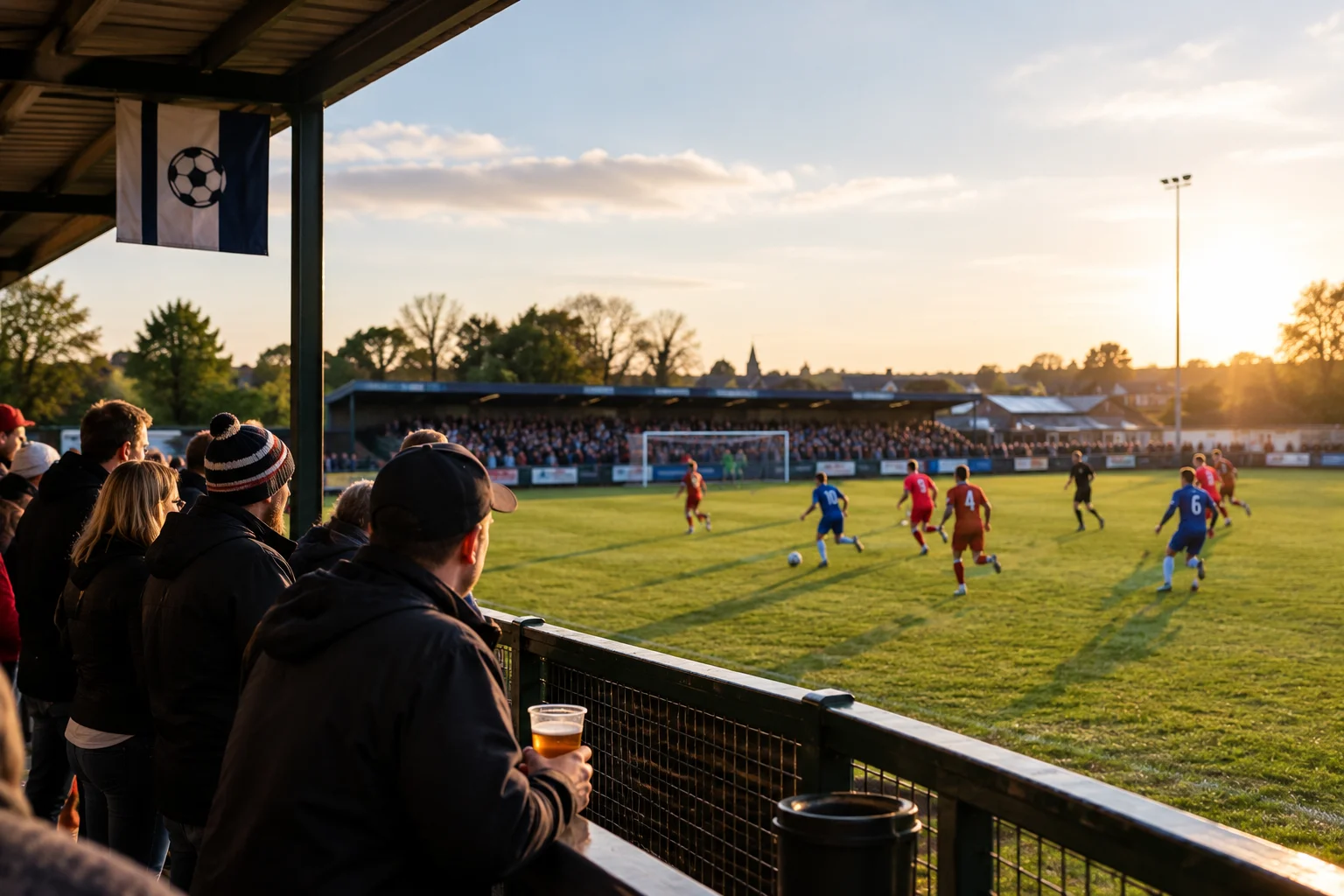
Beneath the clubs everyone has heard of sits a football world most people never see: hundreds of clubs, playing in front of a few hundred supporters, in grounds you could walk around in ten minutes. Non-league football is the game stripped of the money, the television and the distance between supporter and club, and a growing number of people are discovering it is worth a Saturday.
Here is what it offers, how it works, and why its appeal is rising just as the top of the game feels further away.
What counts as non-league?
Everything below the four professional divisions, which is most of English football.
The English football pyramid runs from the Premier League down through the Football League’s three divisions, and below that sit the non-league levels, dozens of divisions deep, from full-time clubs just below the professional game to village sides playing on public pitches. The word non-league covers an enormous range, from grounds that hold several thousand to pitches with a rope around them.
What they share is a distance from the money and attention of the top. The football is the point, not the spectacle around it.
What does it offer that the top does not?
Closeness, mostly, in every sense.
At a non-league ground you stand a few feet from the pitch, you can hear the players and the coaches, and you can walk around to a different side at half-time. The admission costs a fraction of a professional ticket, you can usually pay on the gate, and a programme and a cup of tea cost a few pounds. The players are often local, sometimes part-time, and frequently stop to talk after the match.
That proximity is impossible at the top of the game and increasingly rare anywhere in professional football. For supporters who feel priced out or pushed away the modern top flight, it is the main attraction.
Why is interest rising?
Because the top of the game has moved away from the traditional matchgoer.
As Premier League kick-off times move for television, ticket prices rise and the atmosphere at some grounds changes, supporters who want the older experience of football have looked down the pyramid and found it. Non-league football offers the things the top flight has lost: affordability, accessibility, a crowd of regulars, and a club that still feels like it belongs to its town.
Groundhoppers have driven some of the interest too, since non-league grounds are where most of the pyramid’s hundreds of stadiums are. Our piece on groundhopping for beginners covers that side of it.
What is the FA Cup run like for a small club?
The highlight of a non-league season, and occasionally of a club’s history.
The early rounds of the FA Cup bring non-league clubs into the same competition as the professional game, and a run that reaches the stage where a big club is drawn can transform a small club’s finances and reputation for a generation. Those ties, a few hundred regulars suddenly joined television cameras and thousands of visitors, are among the most romantic occasions in English football, and the possibility of one gives every non-league season an edge of hope.
Most runs end early. The ones that do not are remembered for decades.
How does promotion and relegation work?
Through the pyramid, in principle all the way to the top.
The English system allows a club to rise from the lowest levels to the Premier League through promotion, division division, and several current professional clubs have done exactly that over the decades. The movement between levels keeps the pyramid alive: a well-run non-league club can climb, and a struggling professional club can fall into the non-league game.
That connection, the theoretical path from a village pitch to the top flight, is part of what makes English football’s structure unusual and part of what gives non-league matches their stakes.
What is the matchday like?
Relaxed, local and self-contained.
A non-league Saturday tends to involve a smaller crowd of regulars who know each other, a clubhouse or a bar that is the social centre of the day, and a match played with genuine commitment despite the modest surroundings. The football is rougher than the professional game but often more open, since the sides are less drilled and more willing to attack.
The absence of television cameras changes the feel entirely. Nothing is being staged for anyone watching at home, because nobody is. The match exists only for the people there.
Is it better for children?
Many parents think so, and the reasons are practical.
A non-league ground is affordable enough to take a family without a major outlay, close enough to the pitch that a child can actually follow the match, and relaxed enough that a restless child is not a problem. The players are approachable after the game in a way professional players never are, and a child can get a programme signed or a word with someone who played. For introducing a child to live football, it is hard to beat.
How do the clubs survive financially?
On gate money, the bar, and volunteers, mostly.
A non-league club runs on a fraction of a professional budget, and much of its income comes from matchday takings, the clubhouse and events rather than television or sponsorship. Many are run largely volunteers, from the committee to the people making the teas, and the players at the lower levels are often paid little or nothing. That economy is precarious, and non-league clubs fold or merge more often than professional ones, but it is also what keeps the game affordable and local.
Supporters who get involved often find there is a role for them beyond watching, which is another part of the appeal and another difference from the top.
Is the football any good?
Better than people expect, particularly in the upper levels.
The clubs just below the professional game are full of players who were released professional clubs, or who chose a different path, and the standard is higher than the surroundings suggest. Lower down, the quality drops, but the commitment does not, and a well-contested match between two local rivals in the lower divisions can be as gripping as anything higher up.
The point of non-league football was never that it matched the top for quality. It is that it offers something the top cannot, at a price anyone can afford, a few feet from the pitch.
The best way to understand the appeal is to go. A single Saturday at a non-league ground, standing the pitch with a few hundred regulars, explains more about why people love it than any description can.
Frequently asked questions
What is non-league football?
All English football below the four professional divisions — dozens of levels, from full-time clubs just below the Football League down to village sides on public pitches.
Is non-league football cheaper to watch?
Considerably. Admission is a fraction of a professional ticket, usually payable on the gate, and the whole matchday costs a few pounds.
Can a non-league club reach the Premier League?
In principle, yes. The English pyramid allows promotion division division from the lowest levels to the top, and several current professional clubs climbed that way.