
 henrybella2211@gmail.com
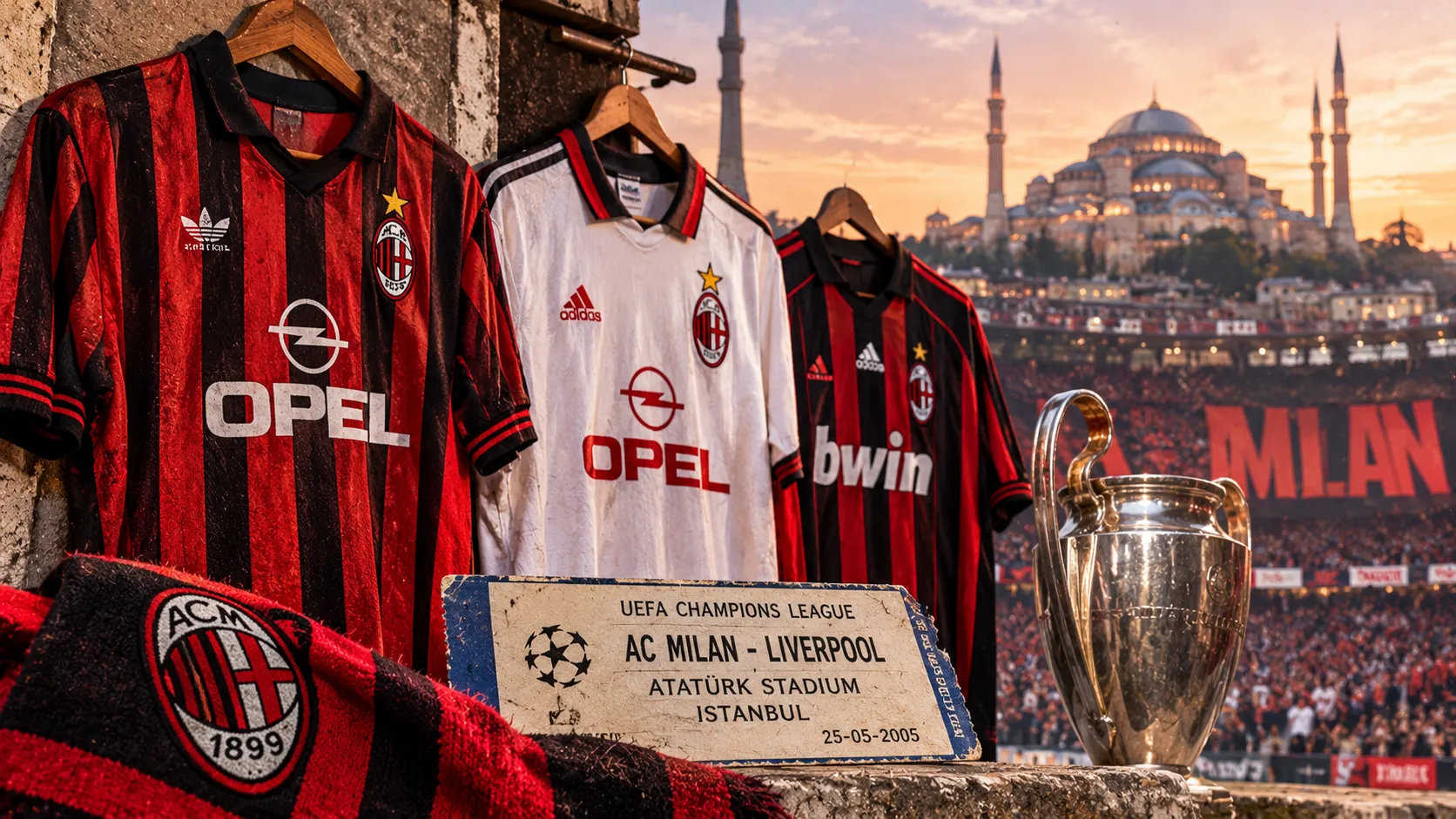
For anyone who made the trip, ac milan retro shirts are inseparable from one evening in May 2005. The red and black stripes are the shirt the other side was wearing when something happened that nobody in the stadium expected, including the people it happened to.
Which is a strange reason to want an opponent’s shirt, and a good one. The best away days are defined as much who you played as where you went.
The night itself
25 May 2005, the Atatürk Olympic Stadium, a long way outside Istanbul. Maldini scored inside the first minute and Crespo added two before the interval, and at half time it was 3-0 and over.
What followed is the most improbable six minutes in the competition’s history. Gerrard headed in on fifty-four minutes, Šmicer struck from distance two minutes later, and on sixty minutes Alonso scored from the rebound after Dida saved his penalty. Three-all, and it stayed that way through extra time.
Dudek then saved from Shevchenko to win it on penalties, and UEFA records it as Liverpool’s fifth European Cup. The fact that it was the fifth is why the trophy stayed on Merseyside permanently.
The away day, honestly
It was a nightmare and everybody who went would do it again. The stadium sits roughly thirty kilometres west of the city with very little transport to it, and the journey out took hours in both directions for most people.
Flights were scarce and expensive, accommodation was worse, and a significant number of supporters travelled on routes that involved several countries and no sleep. The stories about how people got there are better than the stories about the match, which is saying something.
The lesson for anyone planning a European trip is the one Istanbul taught the hard way: the final whistle is not the end of the day. Work out how you are getting back before you work out how you are getting there, as our complete away days guide sets out for domestic trips as well.
Why do Milan wear red and black?
Because the club was founded Englishmen, which is also why it is Milan rather than Milano. Herbert Kilpin and Alfred Edwards set it up in 1899 as a football and cricket club, and the colours were Kilpin’s choice.
The story he told was that the red stood for fire and the black for fear — the idea being that opponents should be afraid of them. Whether that is literal or embellished, it has stuck for well over a century, and the rossoneri nickname comes directly from it.
The stripes themselves have varied in width considerably over the decades, which is the most useful thing to know when dating a shirt. Nineties Milan shirts carry broad bands; earlier ones are narrower, and the proportions of a reproduction are the quickest way to judge whether it is a serious attempt or a generic striped shirt with a crest on it.
What was the rematch like?
Two years later, in Athens, the same two sides met in the final again and Milan won 2-1 through two goals from Inzaghi, with a late Liverpool reply. It is the least-discussed Champions League final involving either club and it mattered a great deal to the people who were there.
As an away day it was considerably worse organised than Istanbul, which took some doing. Ticketing problems around that final are still remembered bitterly supporters who travelled with valid tickets and could not get in, and the subsequent inquiries changed how finals are stewarded.
The footballing point is that Milan were the better side across both nights and lost the one that mattered more. That is worth remembering when Istanbul is told as a story about Liverpool’s heroism — it was also a story about a very good team losing a lead it should have held.
What to check on a Milan reproduction
Stripe alignment first. On a well-made shirt the stripes meet at the shoulder seam and continue cleanly down the side; on a cheap one there is a visible break where the panels join. Striped shirts are unforgiving in this respect, which makes them easy to assess.
Crest detail second. The Milan badge includes the red cross of Saint George and the club lettering, and both suffer on poor reproductions — the cross loses its proportions and the lettering thickens. Hold it against a photograph of the real thing and the difference is immediate.
Collar and cuff construction third, because this is where production costs get cut. And fabric weight last, which is the one thing you cannot judge from a listing photograph and the one that most determines whether the shirt feels like the period it claims to be from.
How much does a good one cost?
Less than you would guess. Modern official reissues of the famous nineties shirts sit in the same bracket as a current-season replica, and unofficial reproductions of reasonable quality cost half that.
Genuine shirts from the period are a different market. A boxed or unworn nineties Milan shirt in the right size commands a real premium, and match-worn examples with provenance go considerably higher into the territory where authentication matters more than condition.
For most people the sensible spend is a good reproduction with correct stripe proportions and a properly embroidered crest. That is the difference between a shirt that looks right in a photograph and one that looks right in a pub, and it costs very little extra.
Which Milan shirt to buy
The 2005 shirt is the obvious one if the point is Istanbul, and it is not the most interesting kit the club has produced. The late-eighties and early-nineties shirts from the side that dominated Europe are better objects and carry more history.
If you want the Istanbul connection without the obvious choice, the 2007 shirt is worth a thought. Milan won the rematch in Athens two years later, which Liverpool supporters remember considerably less fondly and which completes the story properly.
Prices are reasonable across the board because Milan shirts were produced in enormous numbers and the club has a global following that keeps reproductions in continuous supply. You are not paying a scarcity premium on anything from the last forty years.
Owning the opposition’s shirt
Some people find this odd and it is a long tradition. Shirt swaps between supporters are part of how European away days work, and a drawer full of other clubs’ kits is the most honest record of where you have actually been.
It also ages better than a replica of your own team. A Liverpool shirt from 2005 is one of several thousand in any given pub on a Saturday; a Milan shirt from 2005 in a Liverpool pub starts a conversation every time.
If you are travelling to a European tie this season, take something to swap. It is the cheapest souvenir in football and the only one that means anything to both people involved, which is worth more than whatever you would have bought at the ground. Planning the rest of it properly is covered in how to plan a European away day.
Frequently asked questions
What happened in the 2005 Champions League final?
Milan led 3-0 at half time through Maldini and two from Crespo. Liverpool scored three in six minutes through Gerrard, Šmicer and Alonso, and won 3-2 on penalties after extra time.
Why is it AC Milan and not Milano?
Because the club was founded in 1899 Englishmen, Herbert Kilpin and Alfred Edwards, and kept the English form of the city’s name.
How do I tell a good Milan reproduction from a bad one?
Check that the stripes meet cleanly at the shoulder and side seams, then the crest proportions and lettering weight. Striped shirts show up poor construction faster than plain ones.
Which Milan shirt is best to own?
For the Istanbul connection, 2005. For a better object, the late-eighties or early-nineties kits from the side that dominated Europe. Both are inexpensive.