
 henrybella2211@gmail.com
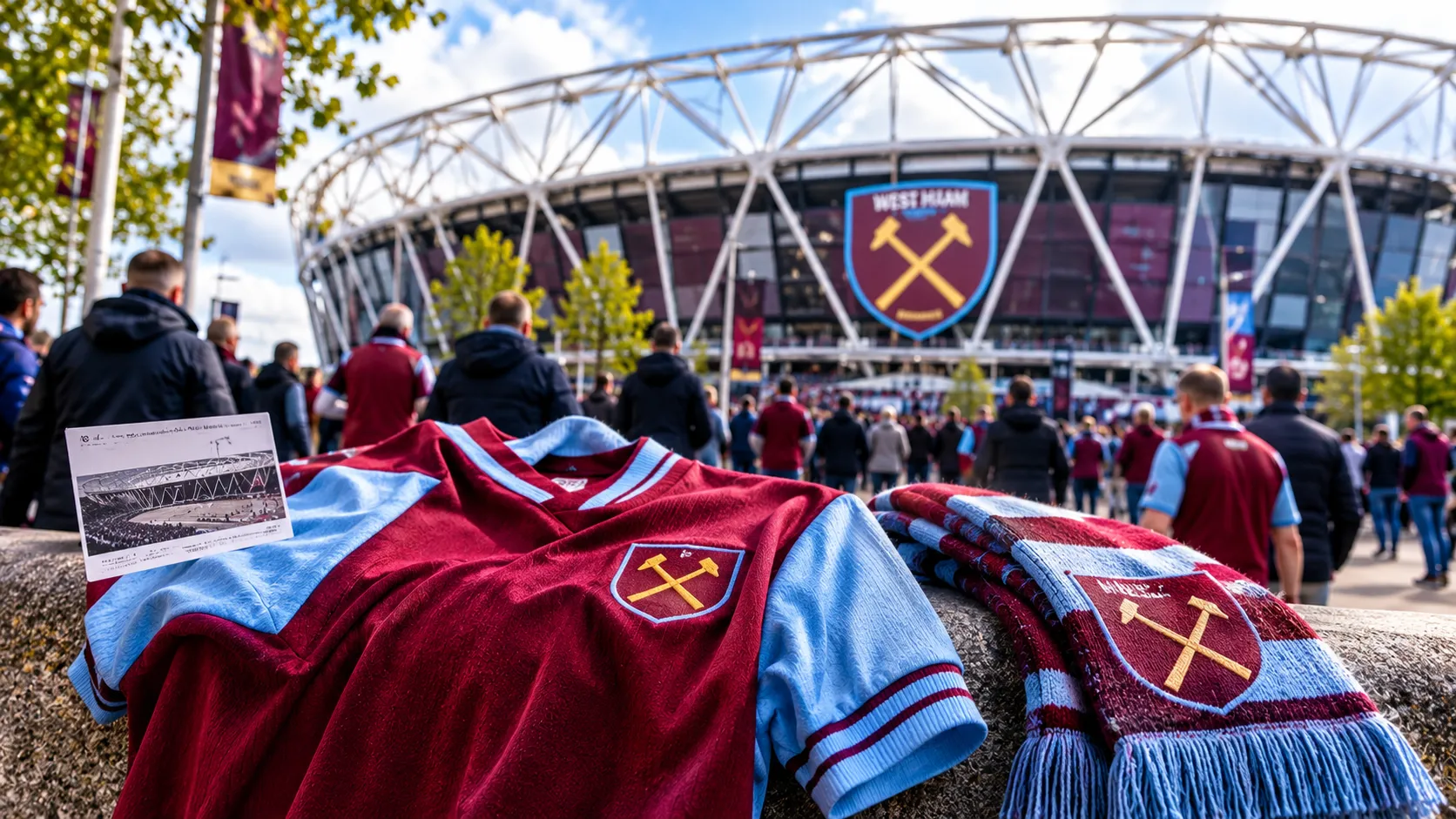
Two things define this away day: a stadium travelling supporters are genuinely divided about, and an away end full of west ham retro shirts. Of all the trips in the Premier League, this is the one opinion splits on most. The transport is superb, the walk in is pleasant, the concourses are enormous and the football is a very long way away from you. The London Stadium was built for athletics and converted afterwards, and no amount of retro-fitting changes the geometry of that.
The shirts are the other half of it. Old claret and blue outsells the current designs among a certain kind of West Ham supporter, for reasons this piece gets to, and the stadium itself is a large part of the explanation.
Getting there, which is the easy part
Stratford is one of the best-connected stations in Britain. The Jubilee and Central lines, the DLR, the Overground, the Elizabeth line and mainline services from Liverpool Street all stop there, which means getting in from almost anywhere is straightforward and getting out afterwards is painless football standards.
From Stratford it is a fifteen- to twenty-minute walk through the Olympic Park to the stadium. It is well signed, entirely flat and pleasant in daylight. Pudding Mill Lane on the DLR is closer and much smaller, which makes it quicker to leave from if you do not mind a short wait for a train with space on it.
Transport for London is the place to check for weekend closures, which affect the Jubilee line and the Overground regularly and can add half an hour you had not planned for.
What the away end is actually like
Away supporters are housed at one end, high up, and the view is the issue. Because the stadium retains its athletics footprint, the stands are set back from the touchlines a margin you notice immediately there is a running-track-sized gap between you and the pitch that no other Premier League ground has.
The consequence is atmosphere rather than sightline. You can see the game perfectly well; what you cannot do is feel it, and sound escapes upwards and outwards instead of being pushed back down onto the pitch. Both sets of supporters are affected equally, which is some comfort and not much.
The facilities are the compensation and they are genuinely good: wide concourses, plenty of serving points, short queues away-end standards. The ground is cashless throughout, so bring a card.
Why do so many West Ham fans wear old shirts?
Because of what the old shirts represent, which is the Boleyn Ground. West Ham left Upton Park in 2016 after more than a century, and for a substantial part of the support the move has never settled. A claret and blue shirt from the eighties or nineties is a statement about where the club came from rather than a fashion choice.
That is not unique to West Ham, but it is unusually concentrated there, because the stadium move was more disruptive than most. Clubs that build a new ground on or near the old site keep the matchday ritual largely intact; West Ham moved to a different part of London into a stadium designed for another sport.
The shirts themselves help. Claret and blue is a distinctive combination that has barely changed, and the crossed hammers crest with and without the castle that nodded to the old ground’s surroundings gives collectors clear markers to date .
How the ground compares to the Boleyn
Worth saying plainly, because it explains the mood. Upton Park was tight, loud, hemmed in terraced streets, and the away end was close enough to the pitch that you could hear individual instructions. It was also cramped, dated and too small for the club’s ambitions, which is why the move happened.
The London Stadium reverses every one of those things. It is bigger, more comfortable, better connected and far easier to get in and out of and it has none of the intimacy. Visiting supporters who did both tend to say the new ground is the better stadium and the worse away day, which is a fair summary.
That trade-off is not unique to West Ham. It is the same calculation every club faces when it moves, and it is why some relocations have worked and others are still resented a decade on.
Which eras collectors chase
Three, mainly. The mid-sixties, for obvious reasons: the club supplied three of England’s 1966 World Cup winners, and shirts associated with that period carry a weight nothing since has matched. The seventies, for the FA Cup runs and for a cut and collar that have aged extremely well. And the early nineties, which produced designs busy enough to be instantly datable and now sit in the sweet spot of nostalgia.
As with any club, the away and third shirts are better value than the home ones, because demand is lower and production runs were smaller. If you want something from a specific season without paying home-shirt prices, start there the principle holds across every range, as our away day guide notes about buying before a trip.
Is it worth making a day of it?
More than most away days, and this is the London Stadium’s real strength. Stratford has a large shopping centre, Hackney Wick and Fish Island are a short walk away with some of the better breweries and food in east London, and the Olympic Park itself is a decent place to spend an hour in daylight.
That matters because the ground itself will not fill your afternoon the way an old stadium does. There is no tight grid of terraced streets and matchday pubs to wander through; the walk in is through a park. Plan the day around east London rather than around the stadium and the trip improves considerably.
If you are going with children, it is one of the easier Premier League trips flat, well-signed, no crush, good facilities.
What to wear and what to expect
Own colours are fine in the away end, as everywhere. The walk through the Olympic Park is mixed and entirely relaxed away-day standards, and most travelling supporters do not bother covering up on this one.
Dress for the height and the wind. The away section is high and the stadium is open enough that it is noticeably colder than the walk in suggested, which catches people out in November. Layers under the shirt rather than a thicker shirt, as always the practical side is covered in what travelling fans need from a shirt.
One last thing worth knowing: the lower tier includes retractable seating that moves to convert the stadium between configurations, so the pitch-side rows differ between an athletics summer and a football season. It explains some of the odd sightlines in the front blocks. For what to eat before you go in, see the best food near football grounds.
Frequently asked questions
Which station is best for the London Stadium?
Stratford for connections, Pudding Mill Lane for a shorter walk and a quicker exit. Stratford is a fifteen- to twenty-minute flat walk through the Olympic Park.
Why does the London Stadium have a poor atmosphere?
It was built for athletics, so the stands sit well back from the touchlines and sound escapes rather than reflecting back onto the pitch. It affects both sets of supporters equally.
Are West Ham’s old shirts more popular than the current ones?
Among a large part of the support, yes. The 2016 move from the Boleyn Ground left a lasting attachment to the pre-move era, and the shirts are the easiest way to express it.
Is the ground cashless?
Yes, throughout food, drink and merchandise. Bring a card or a phone.