
 henrybella2211@gmail.com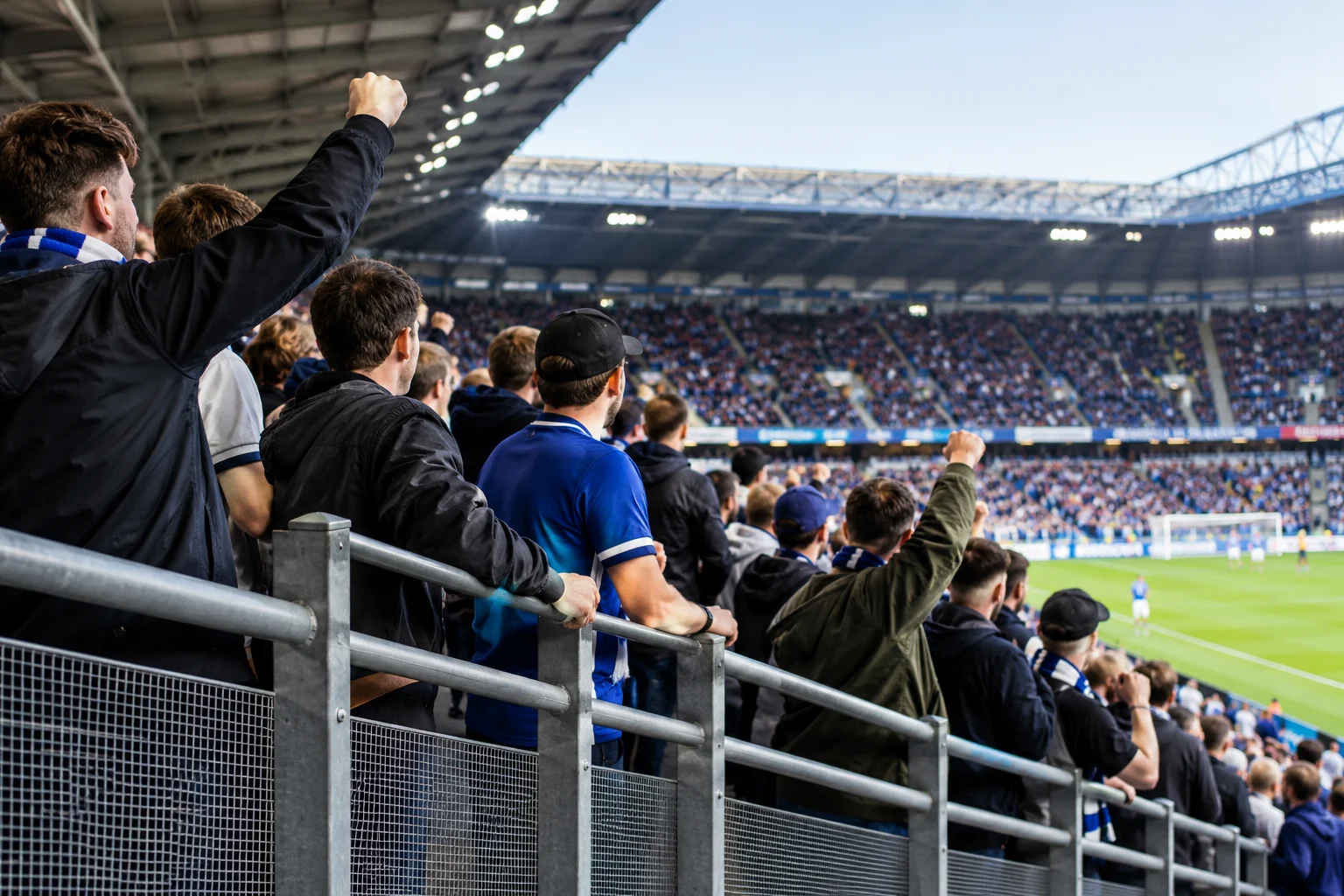
For most of three decades, standing at a top-flight English football match was against the rules. Grounds in the top two divisions were required to be all-seater, a requirement that followed the Taylor Report’s recommendations at the end of the nineteen-eighties, and the policy held for a generation.
It is now possible to stand legally again, in designated areas, at a growing number of grounds. The change was gradual, carefully evidenced and deliberately limited, and it is worth understanding properly because the version in the newspapers “standing is back” is only half right.
What the all-seater rule was for
The requirement came out of a period in which English grounds were genuinely unsafe: large standing terraces with poor crowd management, inadequate exits and no effective limits on how many people entered a pen. Seating addressed several of those problems at once. It fixed the number of people in an area, it made individual spectators identifiable, and it removed the crush dynamics that terracing allowed.
It worked. English grounds became dramatically safer, and nobody involved in the return of standing has seriously argued otherwise. The question raised later was narrower: whether the specific risk that seating removed could be managed another way, now that stadium design, stewarding and crowd modelling had all moved on.
What persistent standing changed
The practical problem was that supporters never stopped standing. In many away ends and in some home sections, people stand for the whole game in rows of seats designed for sitting, which is more dangerous than terracing ever was there is no barrier in front of you, the seat is a trip hazard behind you, and a surge has somewhere to travel.
Clubs were caught between a legal requirement to enforce seating and a practical inability to do it. Stewards could ask thousands of people to sit down and be ignored, or they could stop asking. That stalemate, rather than nostalgia for terraces, is what drove the argument for change.
How rail seating actually works
The solution adopted is usually called rail seating or safe standing, and it is a specific piece of engineering rather than a return to terracing. Each row has a continuous barrier at roughly waist height running its full length, with a seat that either locks in the upright position or folds away.
That barrier does the critical job: it stops any forward movement travelling more than one row. Capacity stays exactly as licensed, because each standing position still corresponds to one seat, so the same number of people are in the area whether they are standing or sitting. The area can also be converted back to normal seating for competitions that require it, which matters for European fixtures.
Why was it allowed back when it was?
Because the evidence was gathered carefully first. The Sports Grounds Safety Authority ran a formal early-adopter programme at a small number of grounds, monitoring crowd behaviour, incident rates and sightlines in licensed standing areas before any wider change was permitted. Clubs applied, were assessed and were licensed individually.
The findings were positive enough that the scheme was extended beyond the original group, and licensed standing areas are now a normal part of new stand design. The process mattered as much as the outcome: this was a regulator testing a change in controlled conditions, not a policy reversal. The Football Supporters’ Association campaigned for it over many years and has the fullest account of how the case was built.
What is it actually like to stand?
Better than standing in a seated row, which is the comparison that matters. You have something to lean on, nobody is trying to make you sit down, and the sightline is designed for a standing crowd rather than fought over. The atmosphere in these sections is generally noisier, partly because the people who choose them are the people who were already standing.
It is not terracing. You have an allocated position, you cannot move along the row to join friends, and the density is the same as a seated area. Supporters who remember the old Kop or the Shed End sometimes find that disappointing. Most people find it a clear improvement on the previous compromise.
What it has changed for away fans
Away sections were where persistent standing was most entrenched, so they were always going to be affected most. At grounds with licensed standing in the away end, the day is straightforwardly better: you stand, with a rail in front of you, and nobody spends the first twenty minutes asking the front three rows to sit down.
Where a ground has converted only its home sections, the mismatch is obvious and occasionally awkward. Visiting supporters stand in ordinary seated rows while the home end a hundred yards away stands legally behind rails, and stewards are left enforcing a rule the stadium has already accepted does not work. Several clubs have moved their away allocation into a converted area for exactly this reason.
The practical advice if you are planning a trip is to check before you book. Clubs publish which sections are licensed, and allocations in those areas sell faster than the rest. It is also worth knowing that European fixtures are usually played with the seats unlocked, so a ground you stood in during a league game may not offer the same thing on a Thursday.
Where it goes next
Licensed standing has spread steadily through the top two divisions, and new stands are increasingly designed so that sections can be converted. The likely direction is that it becomes a standard option rather than a special permission, with clubs choosing how much of a ground to allocate to it.
What is not coming back is open terracing in the top flight, and the people who pushed hardest for safe standing have been clearest about that. The win was a narrow, evidenced change that gave supporters a safer version of what most of them were already doing. If you are planning a trip to a ground with a standing section, ask for it when you book — the allocations go quickly, and it is worth the trip. For somewhere to start, see the Tottenham away day guide.
One last point often missed in the coverage: licensed standing has made some grounds quieter about ticket allocation, not louder. Because a standing section has a fixed, licensed capacity and is in demand, clubs have become more careful about how it is sold, and several now restrict it to season-ticket holders or members. If you want to stand as a visiting supporter, the route is usually through your own club’s away scheme rather than a general sale.
Frequently asked questions
Is safe standing the same as terracing?## Frequently asked questions
Is safe standing the same as terracing?
No. Each person has an allocated position behind a waist-height rail, and capacity is unchanged from the seated licence. Terracing had no fixed positions and no per-row barriers.
Does standing reduce a ground’s capacity?
No. Licensed standing areas hold the same number of people as the seats they replace, because each standing position corresponds to one seat.
Can I choose to stand at any Premier League ground?
Not yet. Standing is only permitted in specifically licensed areas at clubs that have applied and been assessed, so check whether the ground you are visiting has one before you book. For the away day itself, doing it on a budget is the companion piece.